 Rocksday
Dunite vs Peridotite
How to tell them apart
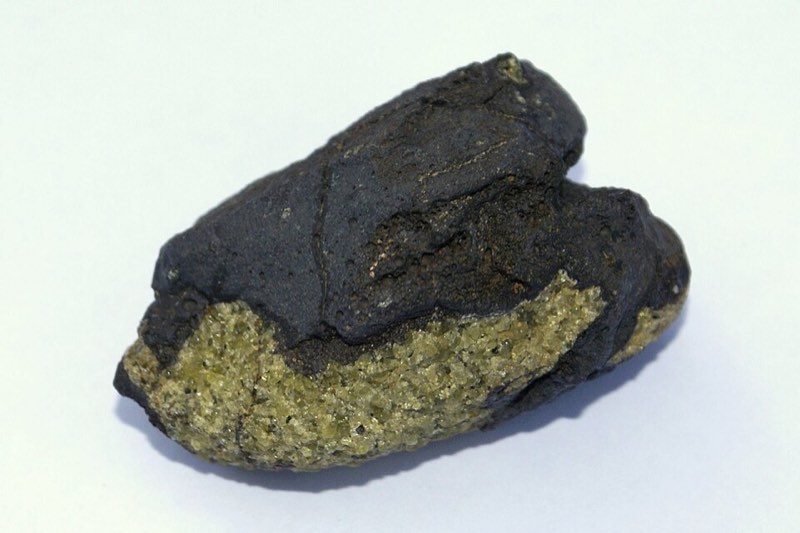
A rock that is more than 90% olivine, bright green inside and tan on the outside.
Photo: B.navez, CC BY-SA 3.0
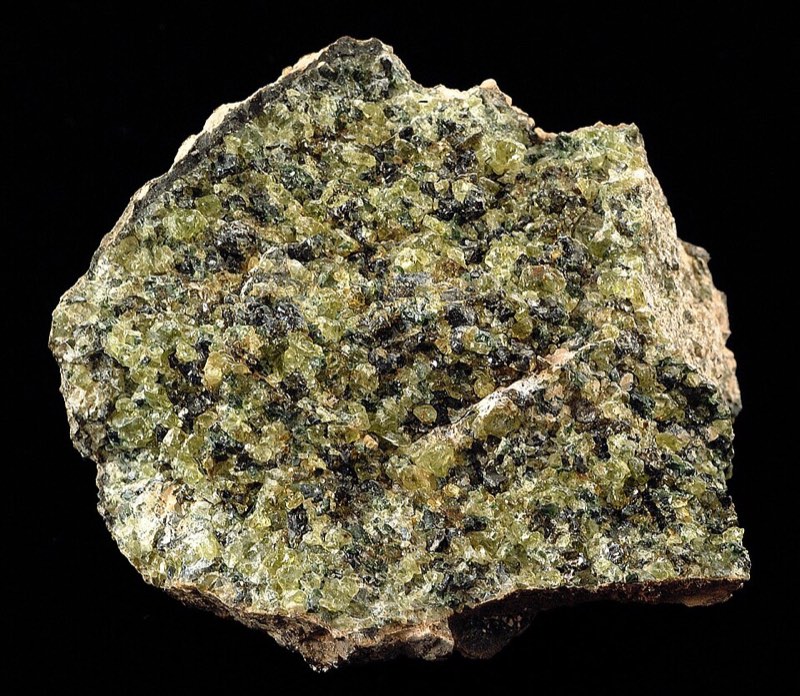
A dense green rock of olivine and pyroxene — the main rock of Earth's upper mantle.
Photo: Shannon Heinle, CC0
Key differences
- Peridotite has noticeable dark pyroxene too.
- Dunite is almost all olivine.
Side by side
| Property | Dunite | Peridotite |
|---|---|---|
| Type | Igneous rock | Igneous rock |
| Mohs hardness | 6.5–7 | 6–7 |
| Luster | Vitreous to granular | Granular |
| Colors | Green, Yellow, Brown | Green, Black, Brown |
| Crystal system / structure | Coarse-grained (ultramafic) | Coarse-grained (ultramafic) |
| Specific gravity | 3.2–3.4 | 3.1–3.4 |
| Found in | Dun Mountain, New Zealand; Twin Sisters, Washington | Samail ophiolite, Oman; Tablelands, Newfoundland |
Properties that are the same for both are grayed out.
How to identify dunite
- Sugary green olivine throughout.
- Tan, sandpapery weathered rind.
- Very heavy.
Structure: Coarse-grained (ultramafic)
Full Dunite guide →How to identify peridotite
- Green, coarse and very heavy.
- Mostly glassy olivine grains.
- Weathers to a rusty brown crust.
Structure: Coarse-grained (ultramafic)
Full Peridotite guide →More comparisons
Could you tell them apart from a blurry close-up?
Play today's Rocksday