 Rocksday
Dolomite vs Limestone
How to tell them apart
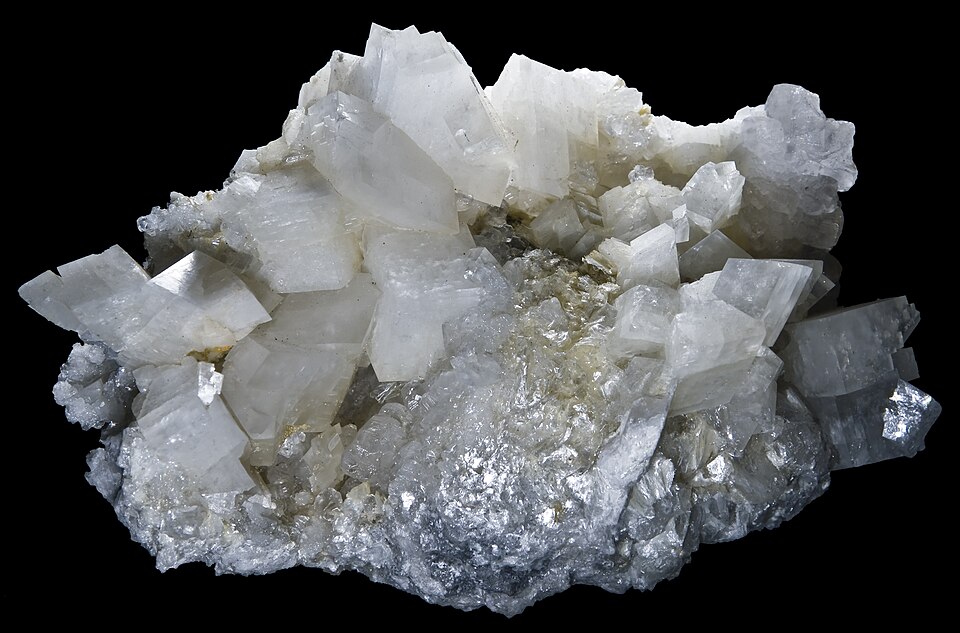
A calcium magnesium carbonate that forms whole mountain ranges of dolostone and pearly, curved 'saddle' crystals.
Photo: Didier Descouens, CC BY-SA 4.0
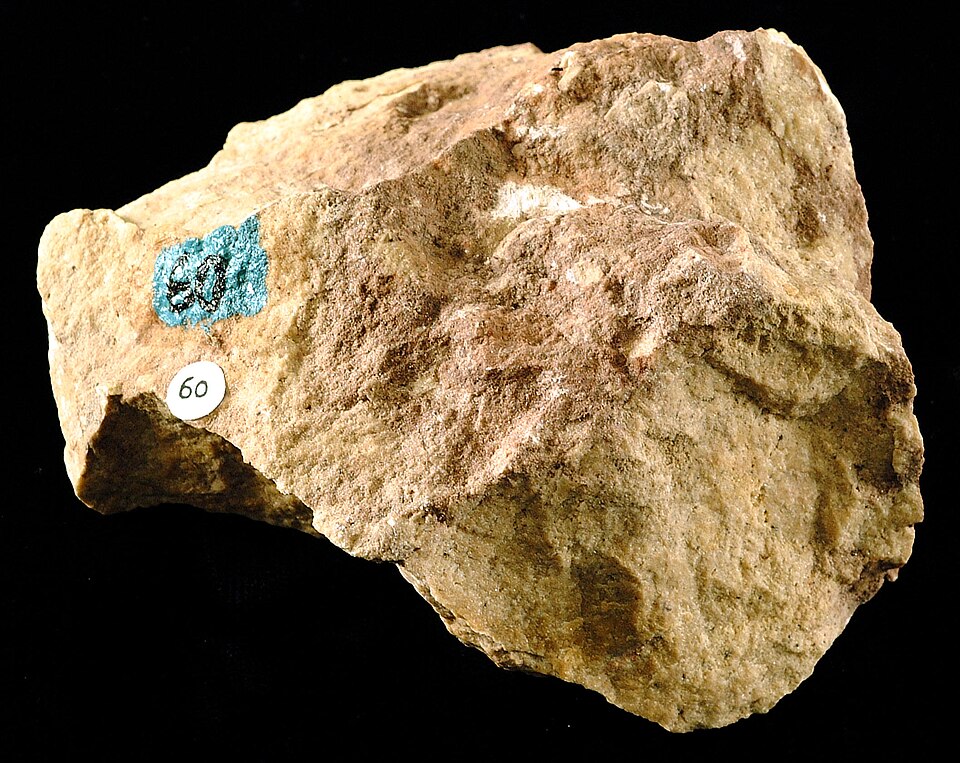
A rock made mostly of calcite, often from shells and skeletons of sea creatures. It dissolves to create caves.
Photo: Mike Davis, CC0
Quick tests
- Acid (vinegar or dilute HCl): Dolomite fizzes weakly, or only when powdered or warmed; Limestone doesn't.
- Texture: Limestone is a rock — a mix of grains or minerals; Dolomite is a single mineral.
Key differences
- Dolostone fizzes only weakly.
Side by side
| Property | Dolomite | Limestone |
|---|---|---|
| Type | Mineral | Sedimentary rock |
| Mohs hardness | 3.5–4 | 3–4 |
| Luster | Vitreous to pearly | Dull |
| Streak | White | — |
| Colors | White, Pink, Gray | White, Gray, Brown |
| Crystal system / structure | Trigonal | Varied, often fossiliferous |
| Specific gravity | 2.84–2.86 | 2.5–2.7 |
| Formula | CaMg(CO₃)₂ | — |
| Found in | Eugui, Spain; The Dolomites, Italy | Bedford, Indiana; Tura, Egypt |
Properties that are the same for both are grayed out.
How to identify dolomite
- Curved, saddle-shaped rhomb crystals.
- Fizzes only weakly — or only when scratched into powder.
- Pearly luster.
- A bit harder than calcite.
Crystal system: Trigonal
Full Dolomite guide →How to identify limestone
- Fizzes in dilute acid.
- Gray to cream, often with shell fossils.
- A knife scratches it.
- Weathers into smooth, pitted surfaces.
Structure: Varied, often fossiliferous
Full Limestone guide →More comparisons
Could you tell them apart from a blurry close-up?
Play today's Rocksday