 Rocksday
Cuprite vs Zincite
How to tell them apart
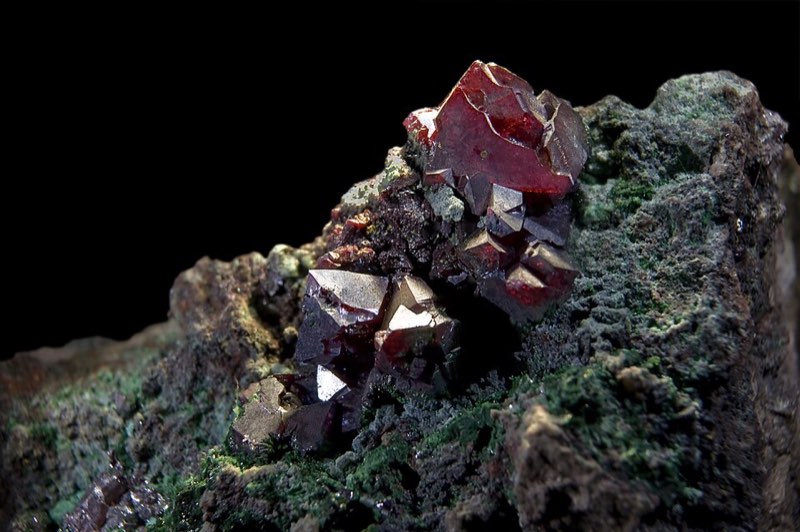
Copper oxide forming deep red cubes and octahedrons, sometimes as hair-like 'chalcotrichite'.
Photo: Didier Descouens, CC BY-SA 3.0
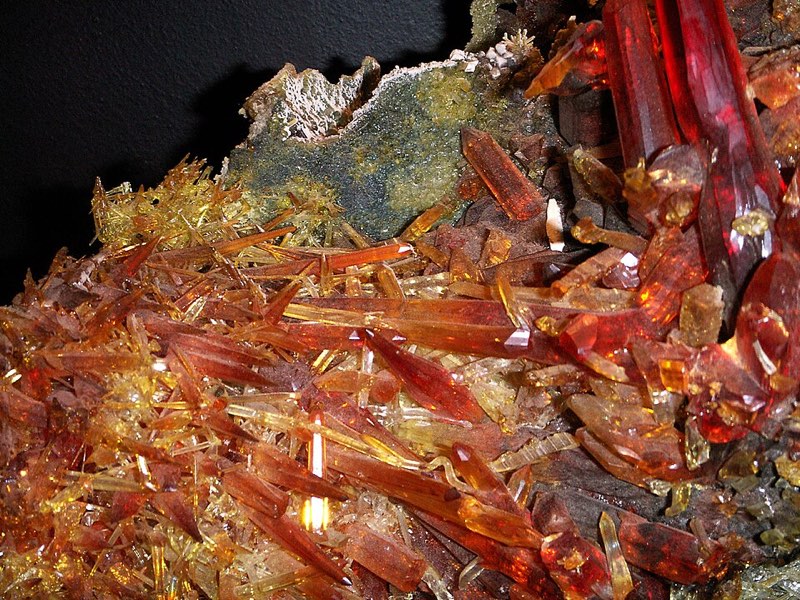
Zinc oxide; natural red zincite is rare, but bright crystals grow as accidental byproducts in smelters.
Photo: cobalt123, CC BY-SA 2.0
Quick tests
- Streak (rub on unglazed porcelain): Cuprite leaves a brownish red streak; Zincite leaves orange-yellow.
Key differences
- Cuprite is darker red and cubic.
Side by side
| Property | Cuprite | Zincite |
|---|---|---|
| Type | Mineral | Mineral |
| Mohs hardness | 3.5–4 | 4–4.5 |
| Luster | Adamantine to submetallic | Subadamantine |
| Streak | Brownish red | Orange-yellow |
| Colors | Red, Black | Red, Orange, Yellow |
| Crystal system | Cubic | Hexagonal |
| Specific gravity | 6.1–6.15 | 5.4–5.7 |
| Formula | Cu₂O | ZnO |
| Found in | Onganja, Namibia; Bisbee, Arizona | Franklin, New Jersey; Polish zinc smelters (synthetic) |
Properties that are the same for both are grayed out.
How to identify cuprite
- Deep red, glinting crystals that can look almost black.
- Heavy.
- Brownish-red streak.
Crystal system: Cubic
Full Cuprite guide →How to identify zincite
- Deep red-orange grains in calcite (natural).
- Clear orange, yellow or green hexagonal prisms (smelter-grown).
- Orange-yellow streak.
Crystal system: Hexagonal
Full Zincite guide →More comparisons
Could you tell them apart from a blurry close-up?
Play today's Rocksday