 Rocksday
Cassiterite vs Wolframite
How to tell them apart
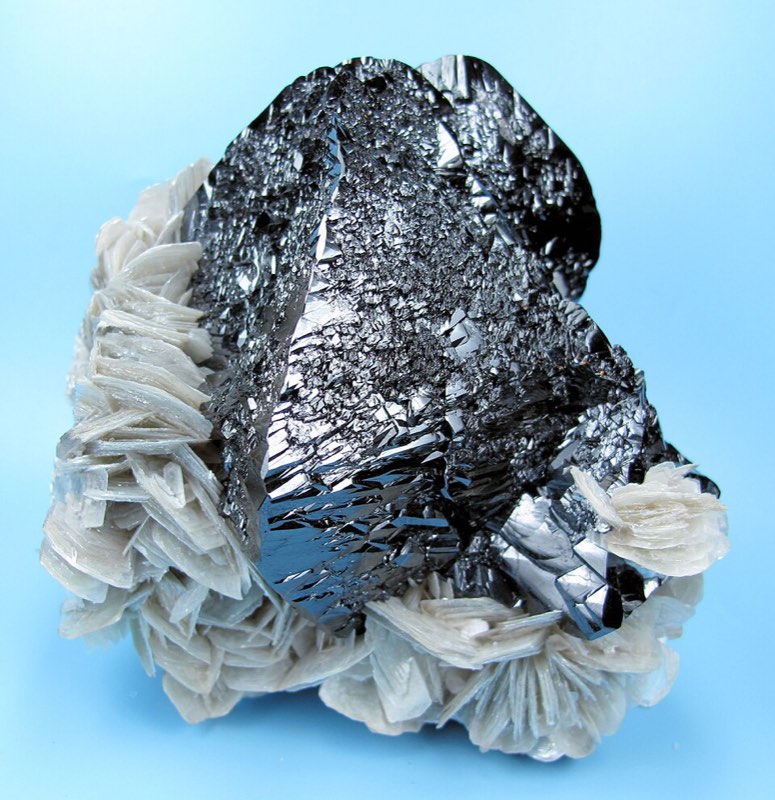
Tin dioxide, the main ore of tin — heavy, shiny brown-black crystals.
Photo: CarlesMillan, CC BY-SA 3.0
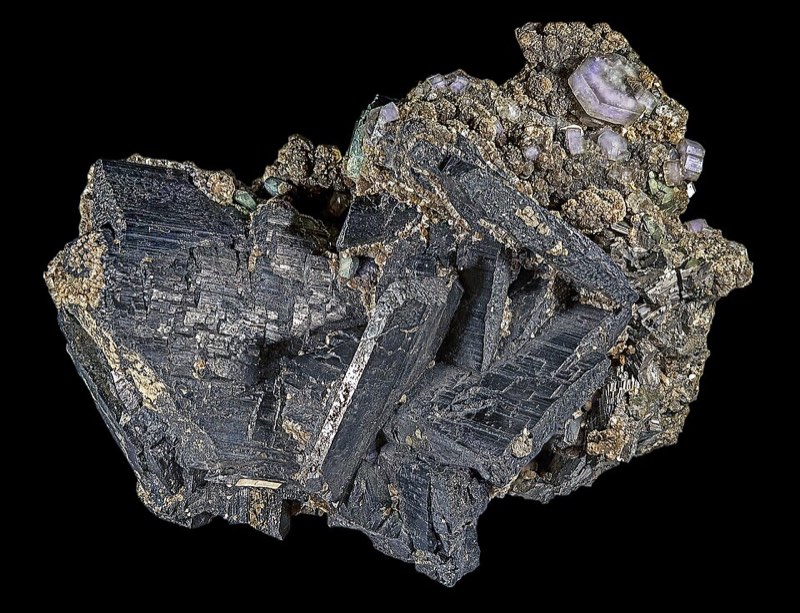
An iron manganese tungstate and a major ore of tungsten — black, flat and very heavy.
Photo: Didier Descouens, CC BY-SA 4.0
Quick tests
- Scratch glass: Cassiterite scratches glass (Mohs 6–7); Wolframite can't (Mohs 4–4.5).
- Streak (rub on unglazed porcelain): Cassiterite leaves a white to pale brown streak; Wolframite leaves reddish brown to black.
Key differences
- Wolframite has a perfect cleavage and darker streak.
- Cassiterite is harder with a pale streak.
Side by side
| Property | Cassiterite | Wolframite |
|---|---|---|
| Type | Mineral | Mineral |
| Mohs hardness | 6–7 | 4–4.5 |
| Luster | Adamantine to submetallic | Submetallic |
| Streak | White to pale brown | Reddish brown to black |
| Colors | Brown, Black, Yellow | Black, Brown |
| Crystal system | Tetragonal | Monoclinic |
| Specific gravity | 6.8–7.1 | 7–7.5 |
| Formula | SnO₂ | (Fe,Mn)WO₄ |
| Found in | Cornwall, England; Llallagua, Bolivia | Panasqueira, Portugal; Jiangxi, China |
Properties that are the same for both are grayed out.
How to identify cassiterite
- Very heavy for a non-metallic mineral.
- Brown to black with a brilliant luster.
- Light-colored streak despite the dark color.
Crystal system: Tetragonal
Full Cassiterite guide →How to identify wolframite
- Black bladed crystals with one perfect, shiny cleavage.
- Extremely heavy for its size.
- Often with quartz and cassiterite.
Crystal system: Monoclinic
Full Wolframite guide →More comparisons
Could you tell them apart from a blurry close-up?
Play today's Rocksday