 Rocksday
Carnotite vs Sulfur
How to tell them apart
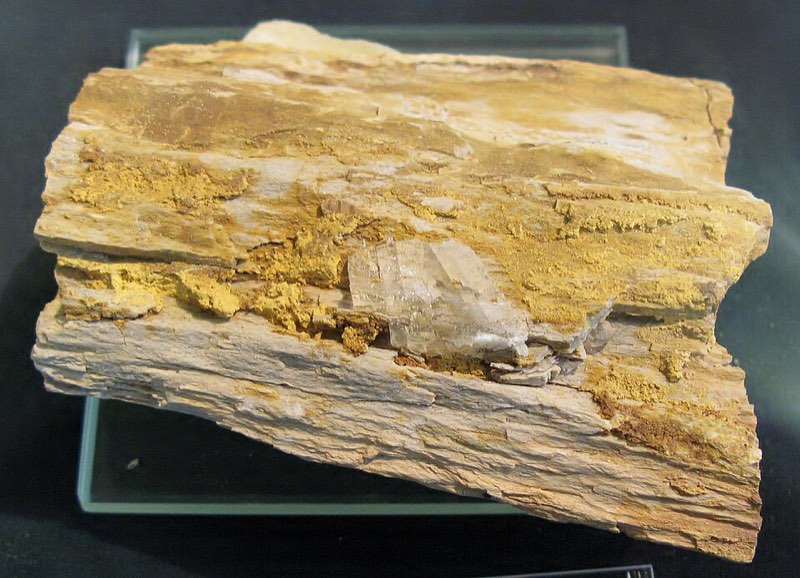
A bright canary-yellow, powdery uranium vanadate that stains sandstones of the Colorado Plateau.
Photo: Ra'ike (see also: de:Benutzer:Ra'ike), CC BY-SA 3.0
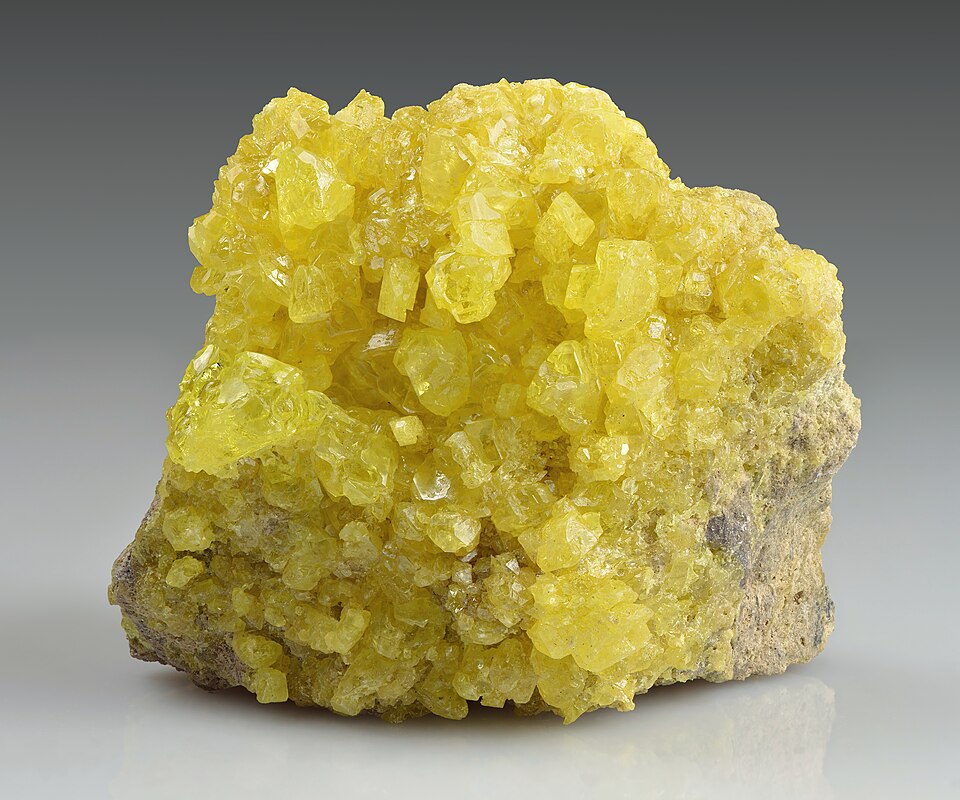
A native element that crystallizes around volcanic vents and in salt domes. Unmistakably bright yellow.
Photo: Ivar Leidus, CC BY-SA 4.0
Quick tests
- Streak (rub on unglazed porcelain): Carnotite leaves a yellow streak; Sulfur leaves white to pale yellow.
- Heft: Carnotite feels noticeably heavier for its size (specific gravity 4.7 vs 2.07).
Key differences
- Sulfur is crystalline and not radioactive.
Side by side
| Property | Carnotite | Sulfur |
|---|---|---|
| Type | Mineral | Mineral |
| Mohs hardness | 2 | 1.5–2.5 |
| Luster | Earthy | Resinous |
| Streak | Yellow | White to pale yellow |
| Colors | Yellow | Yellow |
| Crystal system | Monoclinic | Orthorhombic |
| Specific gravity | 4.7 | 2.07 |
| Formula | K₂(UO₂)₂(VO₄)₂·3H₂O | S |
| Found in | Uravan, Colorado; Utah | Kawah Ijen, Indonesia; Agrigento, Sicily |
Properties that are the same for both are grayed out.
How to identify carnotite
- Canary-yellow powdery coatings, often on fossil wood.
- Radioactive.
- Very soft.
Crystal system: Monoclinic
Full Carnotite guide →How to identify sulfur
- Bright lemon yellow.
- Very light and soft.
- Smells like rotten matches when warmed or rubbed.
- Melts and burns with a blue flame.
Crystal system: Orthorhombic
Full Sulfur guide →More comparisons
Could you tell them apart from a blurry close-up?
Play today's Rocksday