 Rocksday
Bornite vs Covellite
How to tell them apart
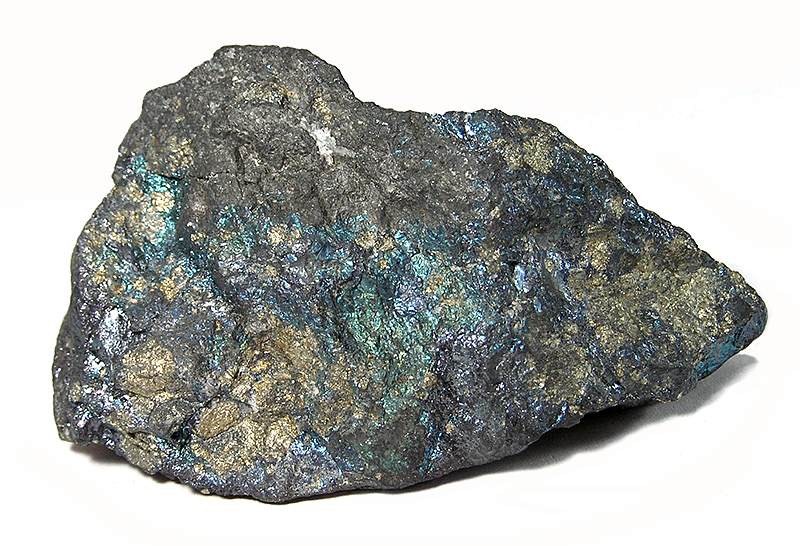
A copper iron sulfide that tarnishes to brilliant purple and blue — the true 'peacock ore'.
Photo: Robert M. Lavinsky, CC BY-SA 3.0
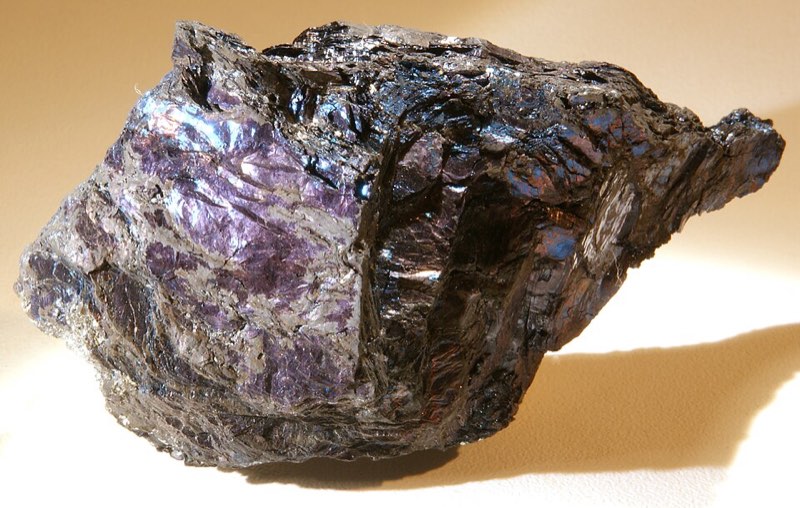
An indigo-blue copper sulfide that forms thin, flexible plates with purple iridescence.
Photo: Didier Descouens, CC BY-SA 3.0
Quick tests
- Fingernail: A fingernail scratches Covellite (Mohs 1.5–2) but not Bornite (Mohs 3).
- Streak (rub on unglazed porcelain): Bornite leaves a grayish black streak; Covellite leaves lead gray.
- Luster: Bornite looks metallic; Covellite doesn't.
Key differences
- Covellite is indigo-blue throughout.
- Bornite is bronze inside, with only surface tarnish.
Side by side
| Property | Bornite | Covellite |
|---|---|---|
| Type | Mineral | Mineral |
| Mohs hardness | 3 | 1.5–2 |
| Luster | Metallic | Submetallic to resinous |
| Streak | Grayish black | Lead gray |
| Colors | Purple, Blue, Brown | Blue, Purple |
| Crystal system | Orthorhombic | Hexagonal |
| Specific gravity | 4.9–5.4 | 4.6–4.8 |
| Formula | Cu₅FeS₄ | CuS |
| Found in | Butte, Montana; Chile | Butte, Montana; Sardinia, Italy |
Properties that are the same for both are grayed out.
How to identify bornite
- Bronze on a fresh break, quickly tarnishing purple and blue.
- Soft — a knife scratches it.
- Usually massive, rarely crystals.
Crystal system: Orthorhombic
Full Bornite guide →How to identify covellite
- Deep indigo blue with purple and brassy iridescence.
- Thin, flexible plates.
- Very soft.
Crystal system: Hexagonal
Full Covellite guide →More comparisons
Could you tell them apart from a blurry close-up?
Play today's Rocksday