 Rocksday
Bauxite vs Ironstone
How to tell them apart
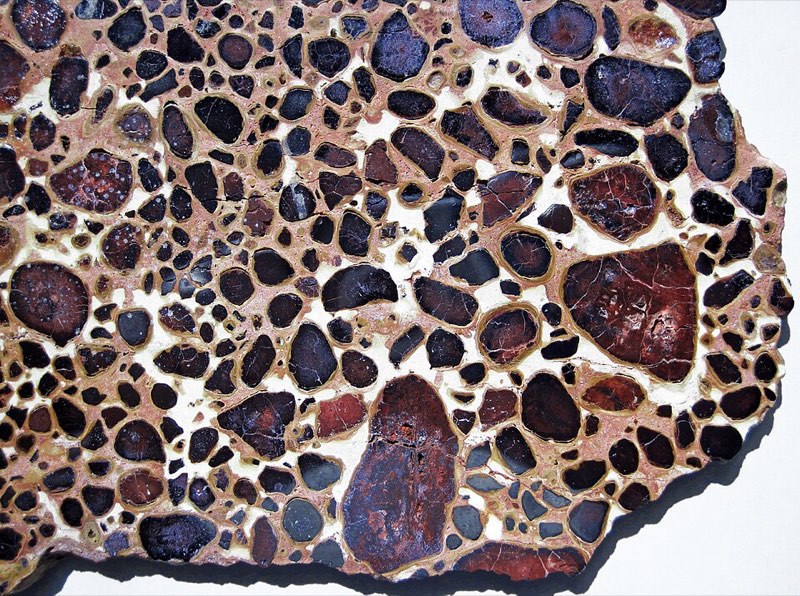
The ore of aluminum, formed by intense tropical weathering.
Photo: James St. John, CC BY 2.0
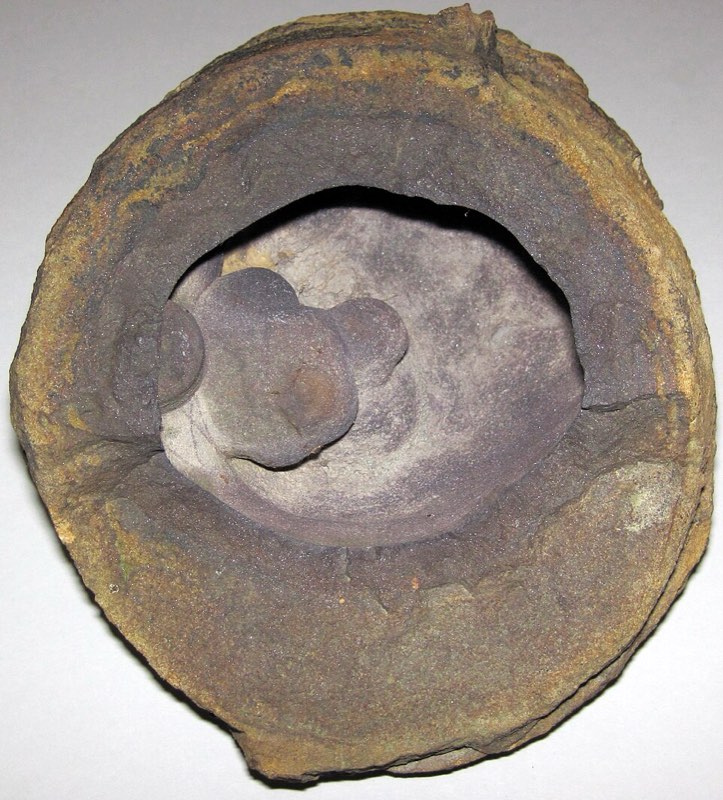
Sedimentary rock rich in iron minerals such as siderite, goethite or hematite.
Photo: James St. John, CC BY-SA 4.0
Quick tests
- Hardness: Ironstone is clearly harder: Mohs 4–6 versus 1–3.
- Heft: Ironstone feels noticeably heavier for its size (specific gravity 3–3.6 vs 2–2.5).
Key differences
- Ironstone is much heavier and harder, with a rusty-brown streak.
Side by side
| Property | Bauxite | Ironstone |
|---|---|---|
| Type | Sedimentary rock | Sedimentary rock |
| Mohs hardness | 1–3 | 4–6 |
| Luster | Earthy | Dull |
| Colors | Red, Brown, Pink, White | Brown, Red, Orange |
| Crystal system / structure | Pisolitic, earthy | Iron-rich sedimentary |
| Specific gravity | 2–2.5 | 3–3.6 |
| Found in | Weipa, Australia; Guinea | Cleveland Hills, England; Birmingham, Alabama |
Properties that are the same for both are grayed out.
How to identify bauxite
- Reddish, earthy, often with pea-sized round pellets.
- Light and soft.
- Clay-like smell when wet.
Structure: Pisolitic, earthy
Full Bauxite guide →How to identify ironstone
- Heavy, rusty brown to red.
- Often forms nodules or layers in shale.
- Rusty-brown streak.
Structure: Iron-rich sedimentary
Full Ironstone guide →More comparisons
Could you tell them apart from a blurry close-up?
Play today's Rocksday