 Rocksday
Aventurine vs Prasiolite
To tell Aventurine from Prasiolite: Aventurine sparkles from mica flakes; prasiolite is even-colored quartz.
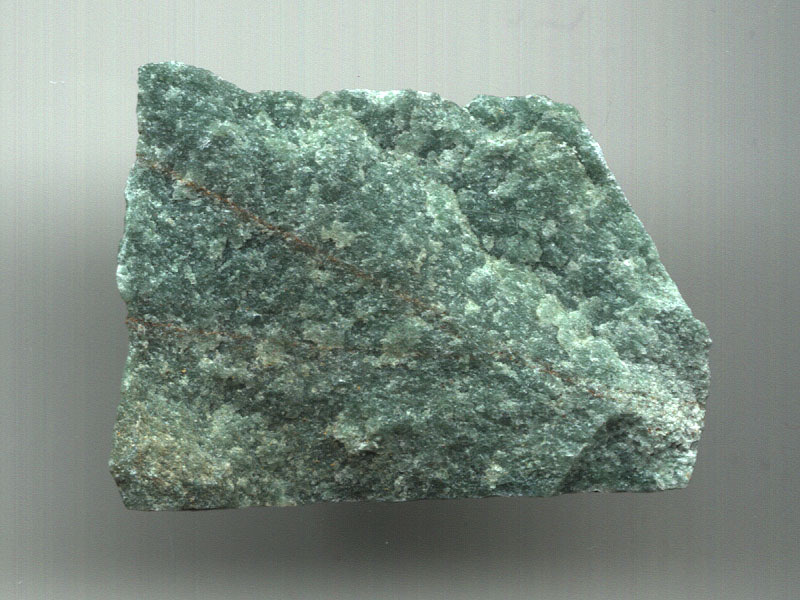
Quartz sparkling with tiny reflective mica flakes, most often green from chromium-rich fuchsite.
Photo: Doobuzz at English Wikipedia, CC BY-SA 3.0
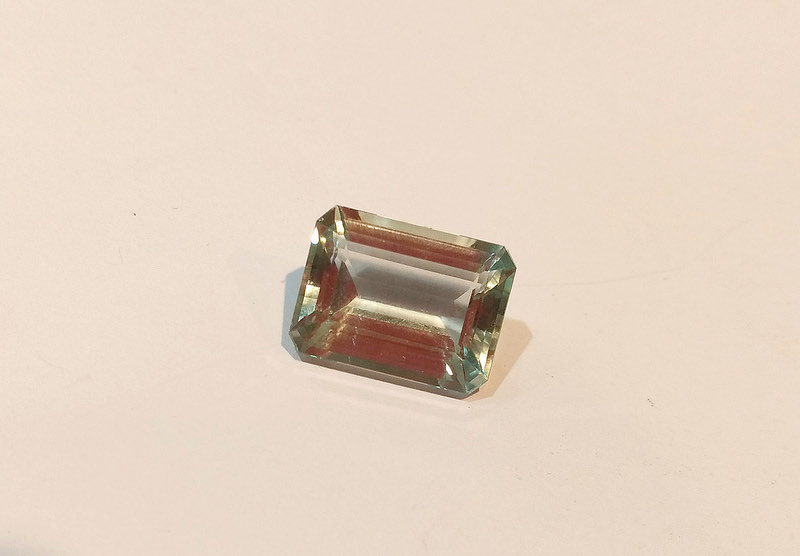
Green quartz. Natural pieces are uncommon; nearly all prasiolite for sale is amethyst that has been heated, or yellow quartz that has been irradiated.
Photo: Mauro Cateb, CC BY-SA 4.0
Key differences
- Aventurine sparkles from mica flakes; prasiolite is even-colored quartz.
Side by side
| Property | Aventurine | Prasiolite |
|---|---|---|
| Type | Mineral | Mineral |
| Mohs hardness | 6.5–7 | 7 |
| Luster | Vitreous | Vitreous |
| Streak | White | White |
| Colors | Green, Blue, Orange | Green |
| Crystal system | Granular quartz | Trigonal |
| Specific gravity | 2.64–2.69 | 2.65 |
| Formula | SiO₂ + mica inclusions | SiO₂ |
| Found in | India; Brazil | Lower Silesia, Poland; Bahia, Brazil |
Properties that are the same for both are grayed out.
How to identify aventurine
- Even green body with a fine glittery sparkle.
- Granular, sugary texture in rough pieces.
- Hard — scratches glass.
Crystal system: Granular quartz
Full Aventurine guide →How to identify prasiolite
- Even leek-green to olive, not banded like aventurine.
- Hardness 7, with quartz's curved fracture.
- Heated amethyst often keeps a geode shape with paler bases.
Crystal system: Trigonal
Full Prasiolite guide →More comparisons
Frequently asked questions
What is the difference between aventurine and prasiolite?
Aventurine is a mineral with a Mohs hardness of 6.5–7 and a vitreous luster, usually green, blue or orange. Prasiolite is a mineral (SiO₂) with a Mohs hardness of 7 and a vitreous luster, usually green.
How can you tell aventurine from prasiolite?
Aventurine sparkles from mica flakes; prasiolite is even-colored quartz.
Could you tell them apart from a blurry close-up?
Play today's Rocksday