 Rocksday
Augite vs Enstatite
How to tell them apart
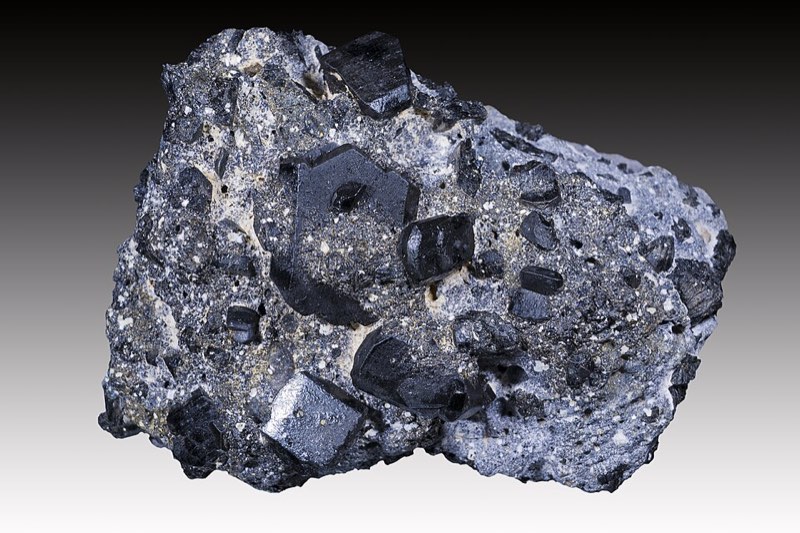
The most common pyroxene, forming stubby black crystals in basalt and gabbro.
Photo: Didier Descouens, CC BY-SA 4.0
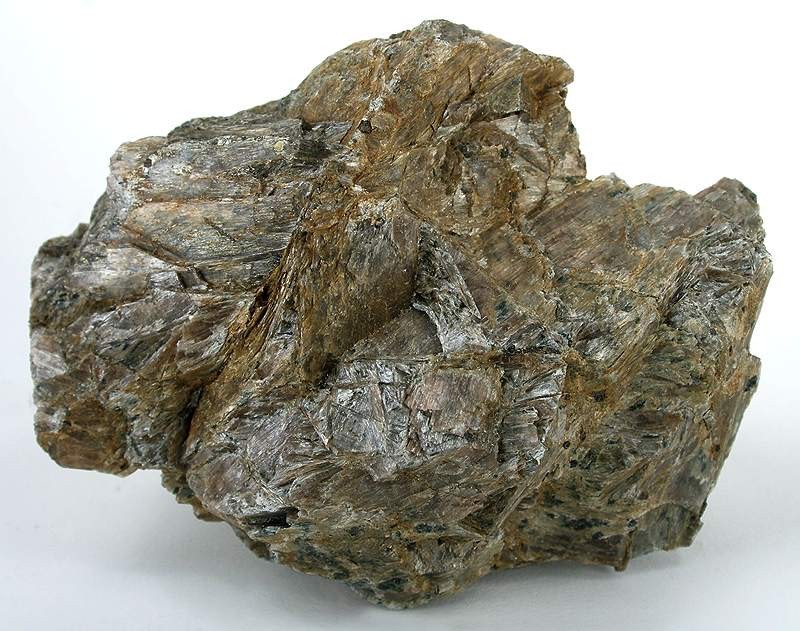
A magnesium pyroxene common in mantle rocks and meteorites; bronze-sheened varieties are called bronzite.
Photo: Robert M. Lavinsky, CC BY-SA 3.0
Quick tests
- Streak (rub on unglazed porcelain): Augite leaves a greenish gray streak; Enstatite leaves gray.
Key differences
- Augite is black and lacks the bronze sheen.
Side by side
| Property | Augite | Enstatite |
|---|---|---|
| Type | Mineral | Mineral |
| Mohs hardness | 5.5–6 | 5–6 |
| Luster | Vitreous to dull | Vitreous to pearly |
| Streak | Greenish gray | Gray |
| Colors | Black, Green, Brown | Brown, Green, Gray |
| Crystal system | Monoclinic | Orthorhombic |
| Specific gravity | 3.2–3.6 | 3.2–3.3 |
| Formula | (Ca,Na)(Mg,Fe,Al,Ti)(Si,Al)₂O₆ | MgSiO₃ |
| Found in | Basalts worldwide; Mount Vesuvius, Italy | Norway; Tanzania |
Properties that are the same for both are grayed out.
How to identify augite
- Short, stubby black prisms with an eight-sided cross-section.
- Two cleavages at nearly right angles.
- Found in dark volcanic rocks.
Crystal system: Monoclinic
Full Augite guide →How to identify enstatite
- Brown to green with a bronzy, pearly sheen.
- Two cleavages at nearly 90°.
- Hardness about 5.5.
Crystal system: Orthorhombic
Full Enstatite guide →More comparisons
Could you tell them apart from a blurry close-up?
Play today's Rocksday