 Rocksday
Aragonite vs Strontianite
How to tell them apart
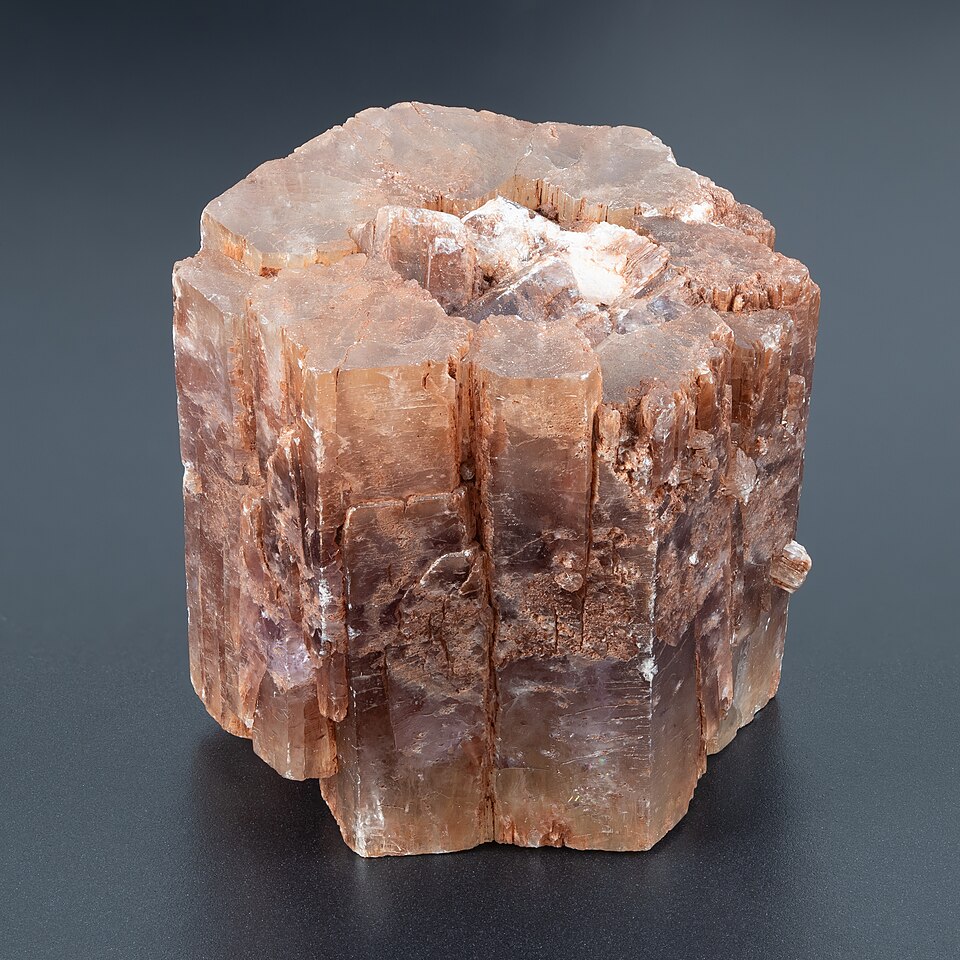
Same chemistry as calcite, different crystal structure. It builds pearls and seashells and forms spiky 'sputnik' clusters.
Photo: JJ Harrison (https://www.jjharrison.com.au/), CC BY-SA 4.0
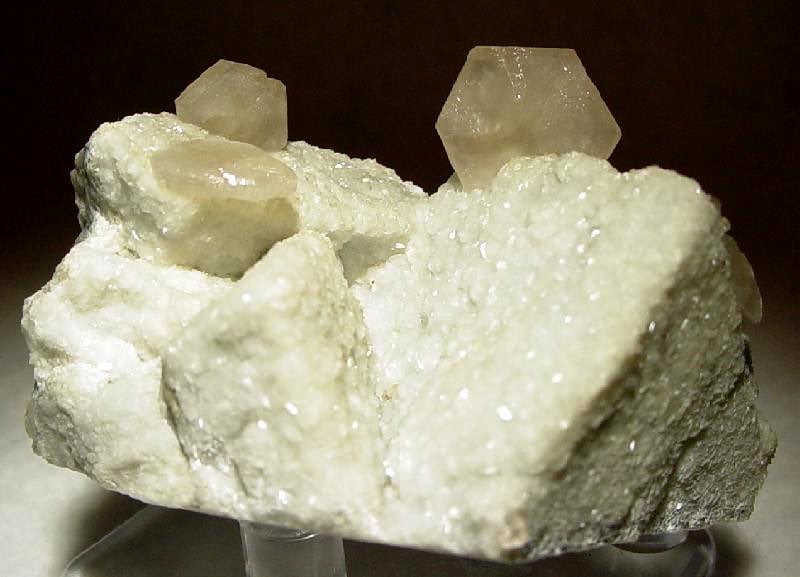
Strontium carbonate forming white tufts and needles; it colors a flame crimson.
Photo: Robert M. Lavinsky, CC BY-SA 3.0
Key differences
- Aragonite doesn't color a flame red.
Side by side
| Property | Aragonite | Strontianite |
|---|---|---|
| Type | Mineral | Mineral |
| Mohs hardness | 3.5–4 | 3.5 |
| Luster | Vitreous | Vitreous to resinous |
| Streak | White | White |
| Colors | White, Orange, Brown | White, Gray, Yellow, Green |
| Crystal system | Orthorhombic | Orthorhombic |
| Specific gravity | 2.94–2.95 | 3.74–3.78 |
| Formula | CaCO₃ | SrCO₃ |
| Found in | Molina de Aragón, Spain; Morocco | Strontian, Scotland; Münsterland, Germany |
Properties that are the same for both are grayed out.
How to identify aragonite
- Fizzes in acid.
- Needle-like or six-sided twinned crystals.
- No rhomb cleavage, unlike calcite.
- Slightly heavier than calcite.
Crystal system: Orthorhombic
Full Aragonite guide →How to identify strontianite
- White to pale needles in tufts.
- Fizzes in acid.
- Turns a flame red.
Crystal system: Orthorhombic
Full Strontianite guide →More comparisons
Could you tell them apart from a blurry close-up?
Play today's Rocksday