 Rocksday
Andesite vs Rhyolite
How to tell them apart
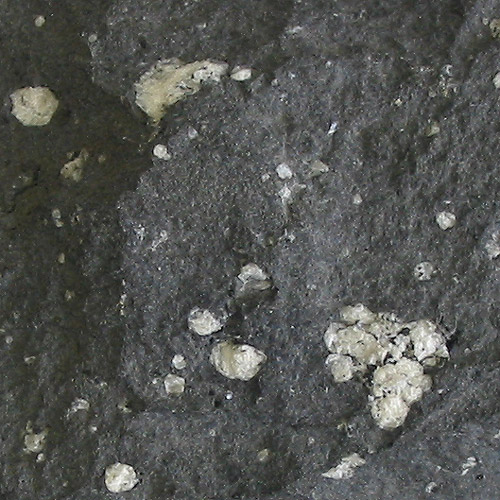
An intermediate volcanic rock typical of explosive volcanoes above subduction zones.
Photo: Photographer: Siim Sepp, 2005, CC BY-SA 3.0
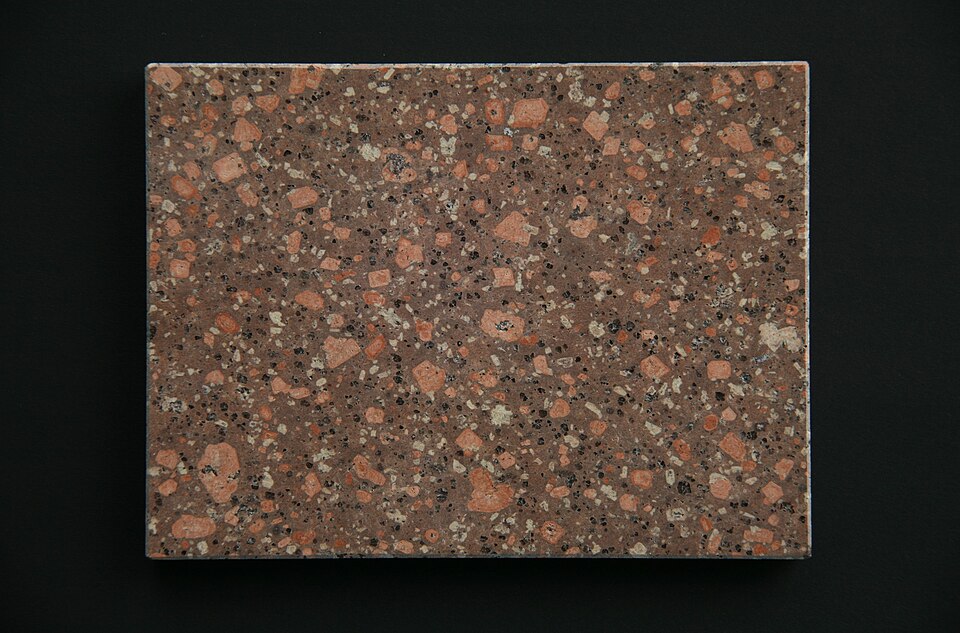
The volcanic twin of granite — same chemistry, but erupted and cooled fast, so its crystals are tiny.
Photo: Benhoff, CC BY-SA 3.0
Key differences
- Andesite is medium gray and darker.
Side by side
| Property | Andesite | Rhyolite |
|---|---|---|
| Type | Igneous rock | Igneous rock |
| Mohs hardness | 6 | 6–6.5 |
| Luster | Dull | Dull |
| Colors | Gray | Pink, Gray, Brown, Red |
| Crystal system / structure | Porphyritic (crystals in fine groundmass) | Fine-grained, often flow-banded |
| Specific gravity | 2.5–2.8 | 2.4–2.6 |
| Found in | The Andes; Cascade Range, USA | Yellowstone, Wyoming; Owyhee region, Oregon |
Properties that are the same for both are grayed out.
How to identify andesite
- Medium gray.
- White feldspar crystals and dark specks scattered in a fine-grained base.
- Heavier than rhyolite, lighter than basalt.
- No visible quartz.
Structure: Porphyritic (crystals in fine groundmass)
Full Andesite guide →How to identify rhyolite
- Light pink, tan or gray.
- Fine-grained, often with swirling flow bands.
- May have small visible quartz or feldspar crystals.
- Lighter in color and weight than basalt.
Structure: Fine-grained, often flow-banded
Full Rhyolite guide →More comparisons
Could you tell them apart from a blurry close-up?
Play today's Rocksday