 Rocksday
Andalusite vs Sillimanite
How to tell them apart
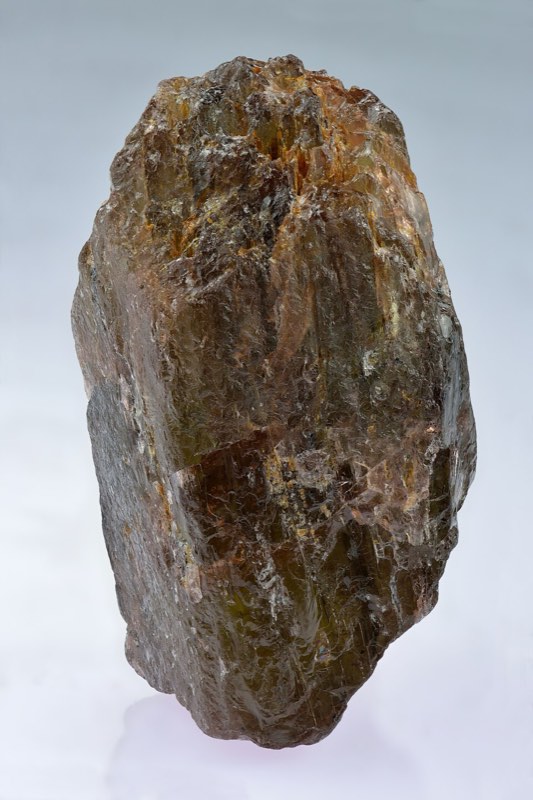
An aluminum silicate of metamorphic rocks. Its variety chiastolite shows a dark cross in cross-section.
Photo: Ivar Leidus, CC BY-SA 4.0
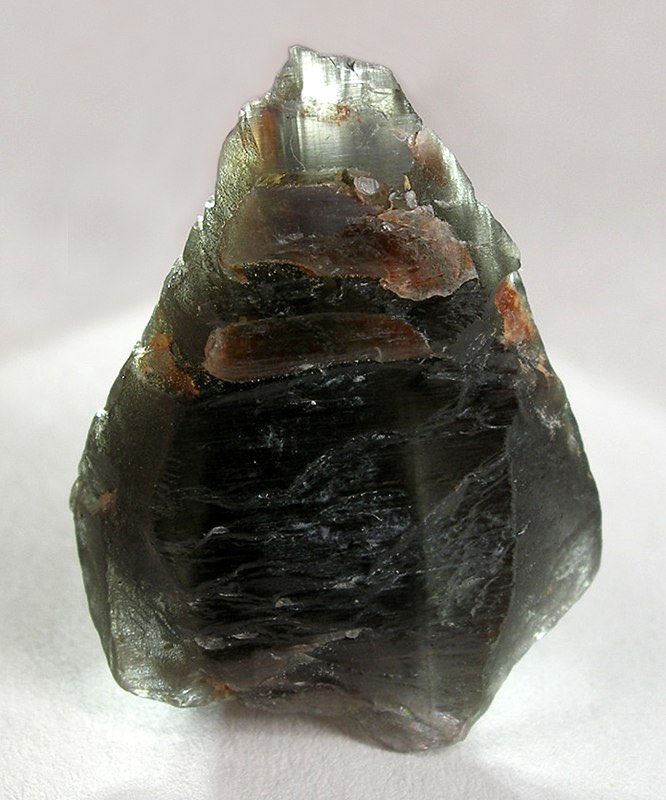
A fibrous aluminum silicate that forms only at very high metamorphic temperatures.
Photo: Robert M. Lavinsky, CC BY-SA 3.0
Key differences
- Sillimanite is fibrous.
- Andalusite forms square prisms.
Side by side
| Property | Andalusite | Sillimanite |
|---|---|---|
| Type | Mineral | Mineral |
| Mohs hardness | 6.5–7.5 | 6.5–7.5 |
| Luster | Vitreous | Vitreous to silky |
| Streak | White | White |
| Colors | Brown, Pink, Green, Gray | White, Gray, Brown |
| Crystal system | Orthorhombic | Orthorhombic |
| Specific gravity | 3.13–3.21 | 3.23–3.27 |
| Formula | Al₂SiO₅ | Al₂SiO₅ |
| Found in | Andalusia, Spain; Minas Gerais, Brazil | Brandywine Springs, Delaware; Sri Lanka |
Properties that are the same for both are grayed out.
How to identify andalusite
- Square prisms, often with a black cross inside (chiastolite).
- Gems flash green and red-brown from different angles.
- Hardness about 7.
Crystal system: Orthorhombic
Full Andalusite guide →How to identify sillimanite
- Fibrous or long, slender prisms.
- Silky luster on fibrous masses.
- Found in high-grade gneiss and schist.
Crystal system: Orthorhombic
Full Sillimanite guide →More comparisons
Could you tell them apart from a blurry close-up?
Play today's Rocksday