 Rocksday
Amazonite vs Microcline
To tell Amazonite from Microcline: Amazonite is the green variety of microcline.
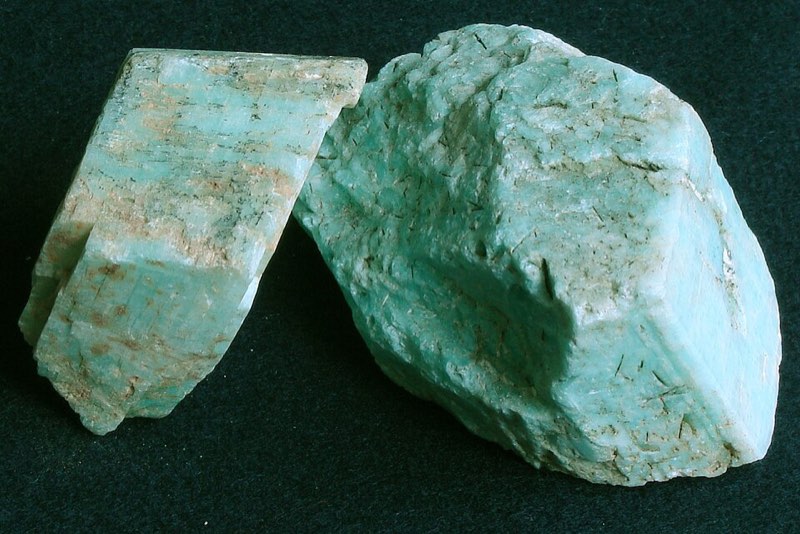
A blue-green variety of microcline feldspar, often with white streaks and blocky cleavage.
Photo: Unknown, CC BY-SA 2.0 br
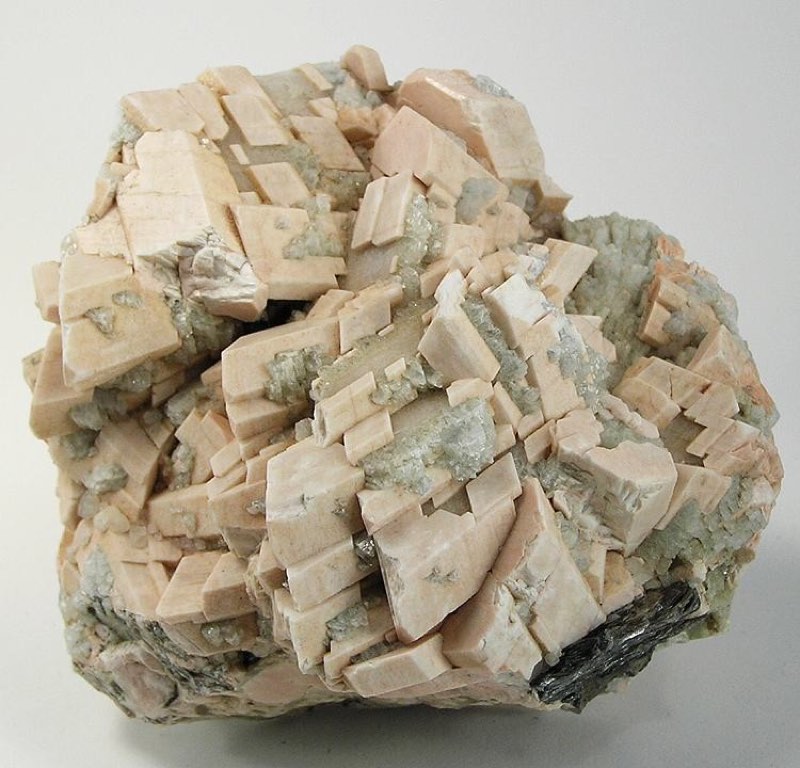
The common potassium feldspar of granite pegmatites. Green microcline is amazonite. By eye it looks like orthoclase.
Photo: Robert M. Lavinsky, CC BY-SA 3.0
Key differences
- Amazonite is the green variety of microcline.
Side by side
| Property | Amazonite | Microcline |
|---|---|---|
| Type | Mineral | Mineral |
| Mohs hardness | 6–6.5 | 6–6.5 |
| Luster | Vitreous | Vitreous to pearly |
| Streak | White | White |
| Colors | Green, Blue, White | Pink, White, Green, Gray |
| Crystal system | Triclinic | Triclinic |
| Specific gravity | 2.56–2.58 | 2.54–2.63 |
| Formula | KAlSi₃O₈ | KAlSi₃O₈ |
| Found in | Pikes Peak, Colorado; Ilmen Mountains, Russia | Pegmatites in Colorado; Minas Gerais, Brazil |
Properties that are the same for both are grayed out.
How to identify amazonite
- Turquoise to mint green with fine white streaks or grid patterns.
- Flat, shiny cleavage faces at right angles.
- Hardness about 6 — scratches glass slightly.
Crystal system: Triclinic
Full Amazonite guide →How to identify microcline
- Blocky pink, white or green crystals with two cleavages near 90°.
- Hardness about 6 — scratches glass with difficulty.
- Green pieces are amazonite. Pink and white ones cannot be separated from orthoclase without a microscope.
Crystal system: Triclinic
Full Microcline guide →More comparisons
Frequently asked questions
What is the difference between amazonite and microcline?
Amazonite is a mineral (KAlSi₃O₈) with a Mohs hardness of 6–6.5 and a vitreous luster, usually green, blue or white. Microcline is a mineral (KAlSi₃O₈) with a Mohs hardness of 6–6.5 and a vitreous to pearly luster, usually pink, white, green or gray.
How can you tell amazonite from microcline?
Amazonite is the green variety of microcline.
Could you tell them apart from a blurry close-up?
Play today's Rocksday