 Rocksday
Agate vs Thomsonite
How to tell them apart
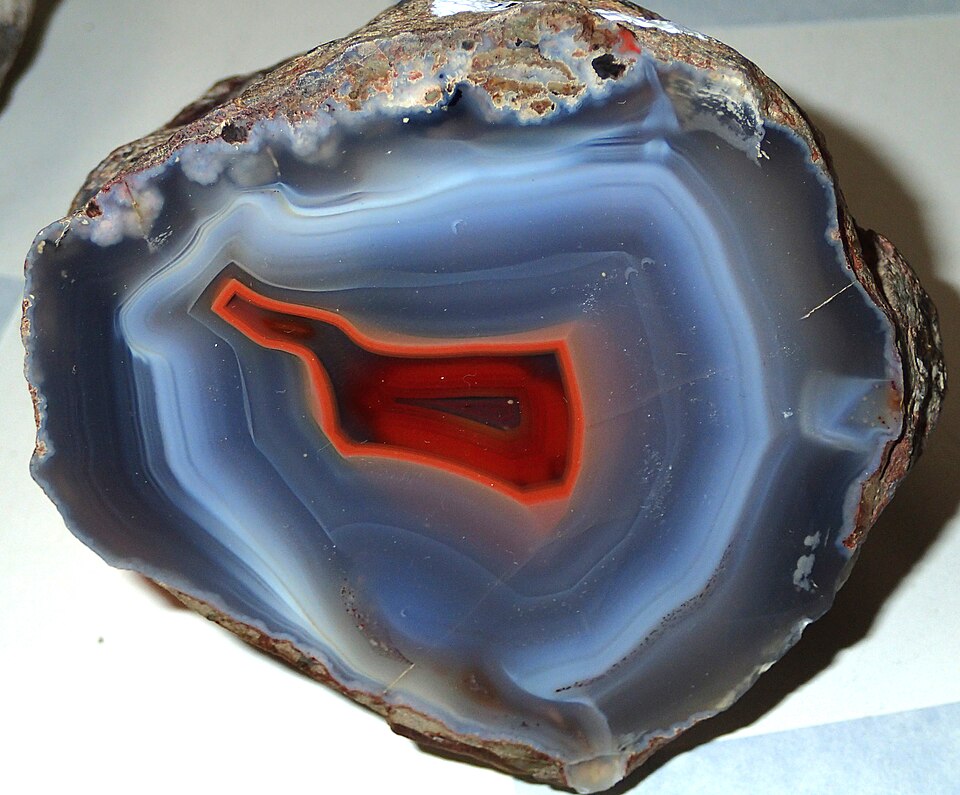
Banded chalcedony — quartz made of microscopic crystals — that fills cavities in volcanic rock layer by layer. Light passes through the bands when held up to the sun.
Photo: James St. John, CC BY 2.0
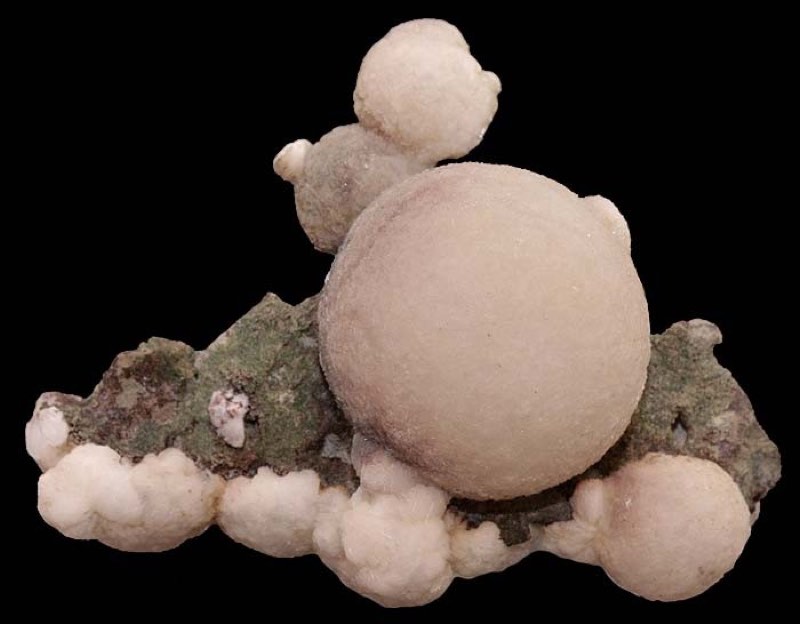
A zeolite that forms radiating 'eye' patterns in pink, green and white inside basalt.
Photo: Robert M. Lavinsky, CC BY-SA 3.0
Quick tests
- Hardness: Agate is clearly harder: Mohs 6.5–7 versus 5–5.5.
Key differences
- Agate is harder and banded rather than radiating.
Side by side
| Property | Agate | Thomsonite |
|---|---|---|
| Type | Mineral | Mineral |
| Mohs hardness | 6.5–7 | 5–5.5 |
| Luster | Waxy to vitreous | Vitreous to pearly |
| Streak | White | White |
| Colors | Red, Orange, White, Gray, Brown, Blue | Pink, Green, White |
| Crystal system | Microcrystalline quartz (chalcedony) | Orthorhombic |
| Specific gravity | 2.58–2.64 | 2.3–2.4 |
| Formula | SiO₂ | NaCa₂Al₅Si₅O₂₀·6H₂O |
| Found in | Lake Superior shores; Rio Grande do Sul, Brazil | North Shore of Lake Superior, Minnesota; Scotland |
Properties that are the same for both are grayed out.
How to identify agate
- Concentric or parallel bands, often in red, orange and white.
- Translucent at the edges when backlit.
- Waxy surface on rough, weathered pieces ('pitted' rind).
- Hard enough to scratch glass.
Crystal system: Microcrystalline quartz (chalcedony)
Full Agate guide →How to identify thomsonite
- Small round eyes of radiating fibers in pink, green and white.
- Set in dark basalt.
- Hardness about 5.
Crystal system: Orthorhombic
Full Thomsonite guide →More comparisons
Could you tell them apart from a blurry close-up?
Play today's Rocksday